
Farm to School Policy
BUILDING IOWA’S FARM TO SCHOOL ECONOMY
A Policy Brief on Farm to School Purchasing Incentives
Iowa is one of the most productive agricultural states in the country, yet much of the food Iowans eat is grown, processed, or packaged somewhere else. At the same time, small and mid-sized farms continue to face shrinking margins, limited market access, and a food economy largely built around scale, specialization, and long supply chains.
Local Food Purchasing Incentives offer a practical way to begin changing that by strengthening one of Iowa’s most consistent public food markets: schools.
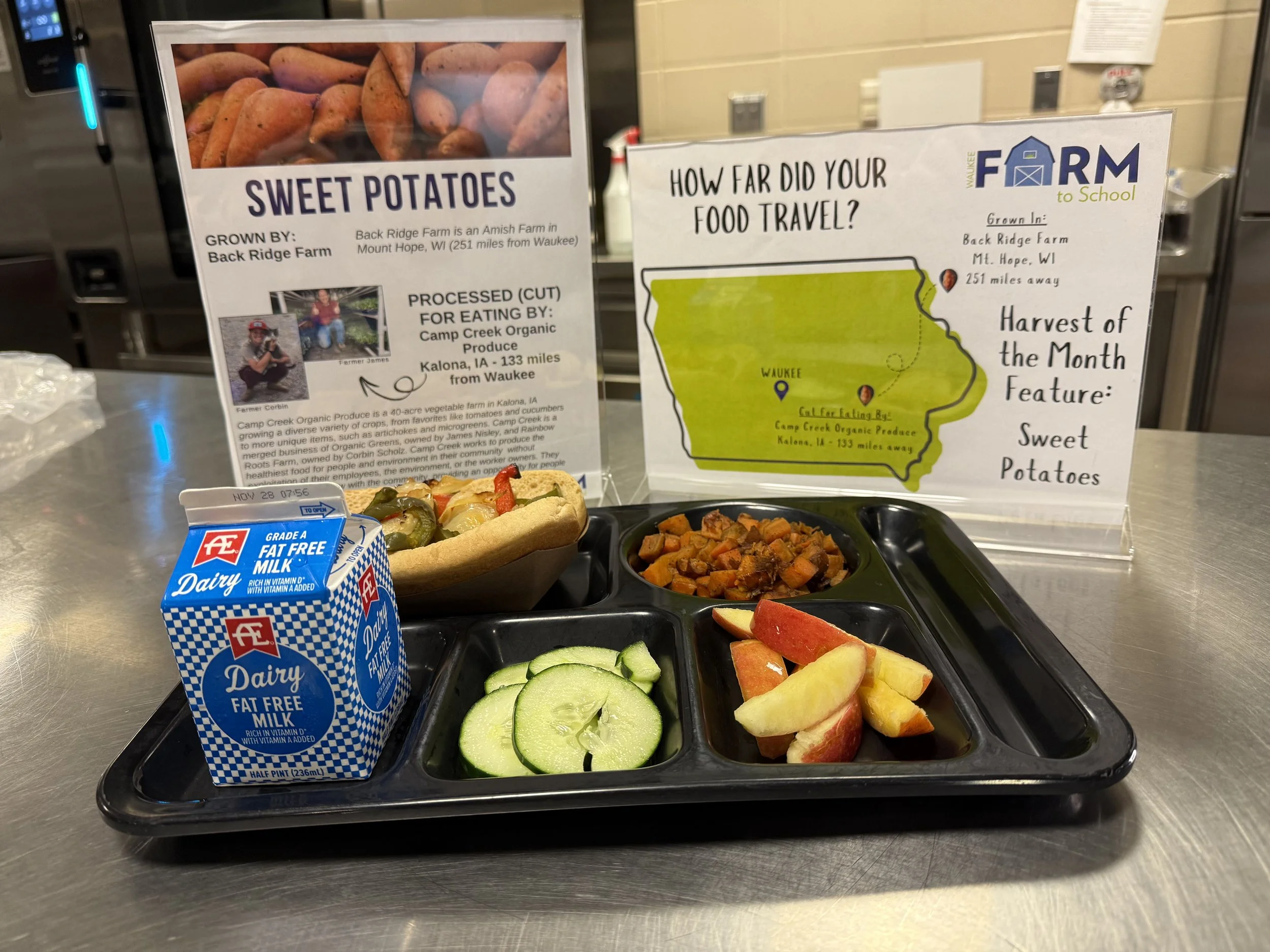
Iowa schools feed thousands of children every day. Farm to school policy helps turn those meals into a practical investment in Iowa farmers, local food markets, child nutrition, and rural communities.
When schools purchase Iowa-grown food, they create reliable markets for farmers, support more diverse farm production, strengthen regional food infrastructure, and help more children access fresh, nutritious meals. Farm to school connects food policy, farm policy, child nutrition, and rural economic development in one practical strategy.
What this brief covers
Why school meals are a practical local food market opportunity
Lessons from Iowa’s Local Food for Schools program
A policy recommendation for a stronger Local Food Purchasing Incentive
Conditions needed for successful implementation
Pathways for future expansion
Who this is for
The Iowa Food System Coalition’s Local Food Policy Network team developed this policy framework to help candidates, policymakers, school leaders, and community partners understand how Local Food Purchasing Incentives can strengthen Iowa’s farm to school economy.
Contact
For questions about this brief or Iowa farm to school policy, contact:
Tommy Hexter
Executive Director, Iowa Food System Coalition
director@iowafoodsystemcoalition.org
Tommy helps connect inquiries with the appropriate Iowa-based partners, including food hubs, school nutrition programs, farm-to-school practitioners, producers, and food access organizations.